
MG crew · Powerlifting · Squat days and heavy singles.
Updated October 2026 · 3 min read
“Do I need wraps, or are sleeves enough?”
For most sessions, sleeves are enough. Wraps are for the heavy sets, and each one has a different job. Here’s what I use, when, and how I put them on.
- Wraps are long elastic bands you wind on before a heavy set. You choose how tight, so you control the support.
- Wrist wraps: pressing and overhead work. Elbow wraps: heavy presses. Knee wraps: heavy squats.
- Sleeves slide on and stay on all session; wraps go on for the set and come off straight after.
- If your hand or foot tingles or goes numb, the wrap is too tight. Loosen it.
Wrist wraps
The ones almost everyone ends up using. They stop the wrist bending back under a heavy bench, overhead press or front rack. Our Might&Glory wrist wraps are 45cm with a hook-and-loop closure.
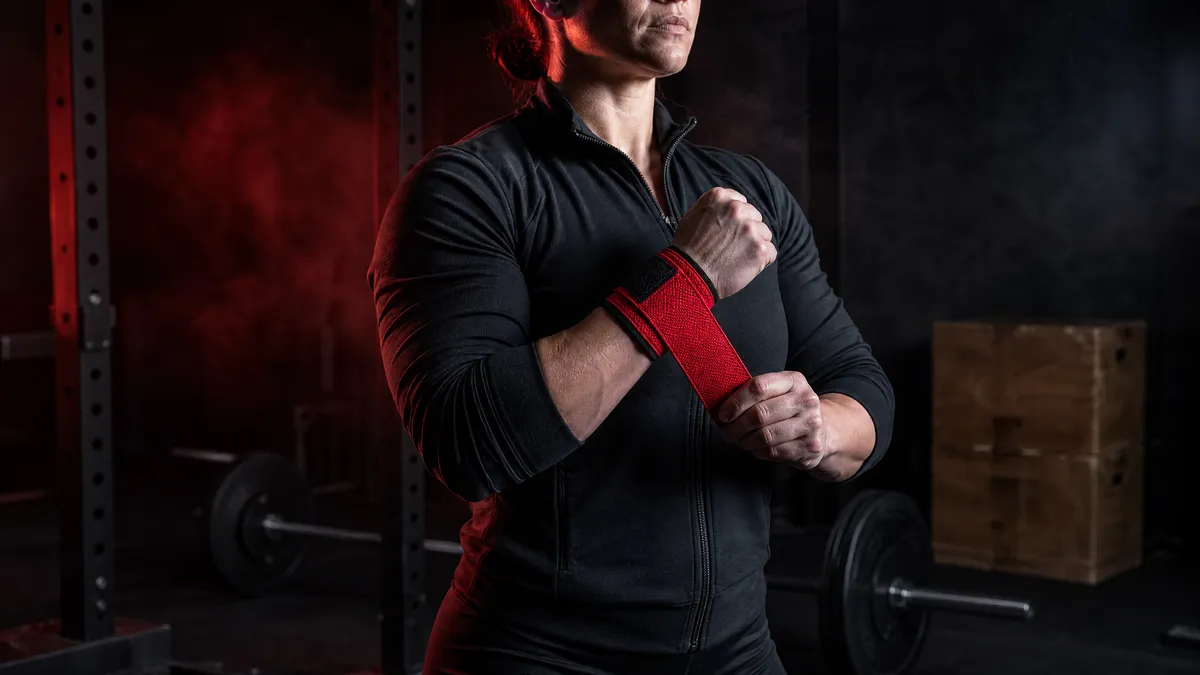
- Start over the joint. The wrap should cover the wrist joint itself, not sit down on your forearm.
- Wind with overlap. Each turn overlaps the last by about half, pulling a little tension as you go.
- Close and check. Make a fist and open it. Firm, but no tingling.
Elbow wraps
Longer (ours are 150cm) and stiffer than sleeves. They’re for heavy bench and overhead pressing when your elbows want extra support. Wind them around the elbow with overlapping turns, firm but not cutting in. They take practice; learn them on lighter sets.
Knee wraps
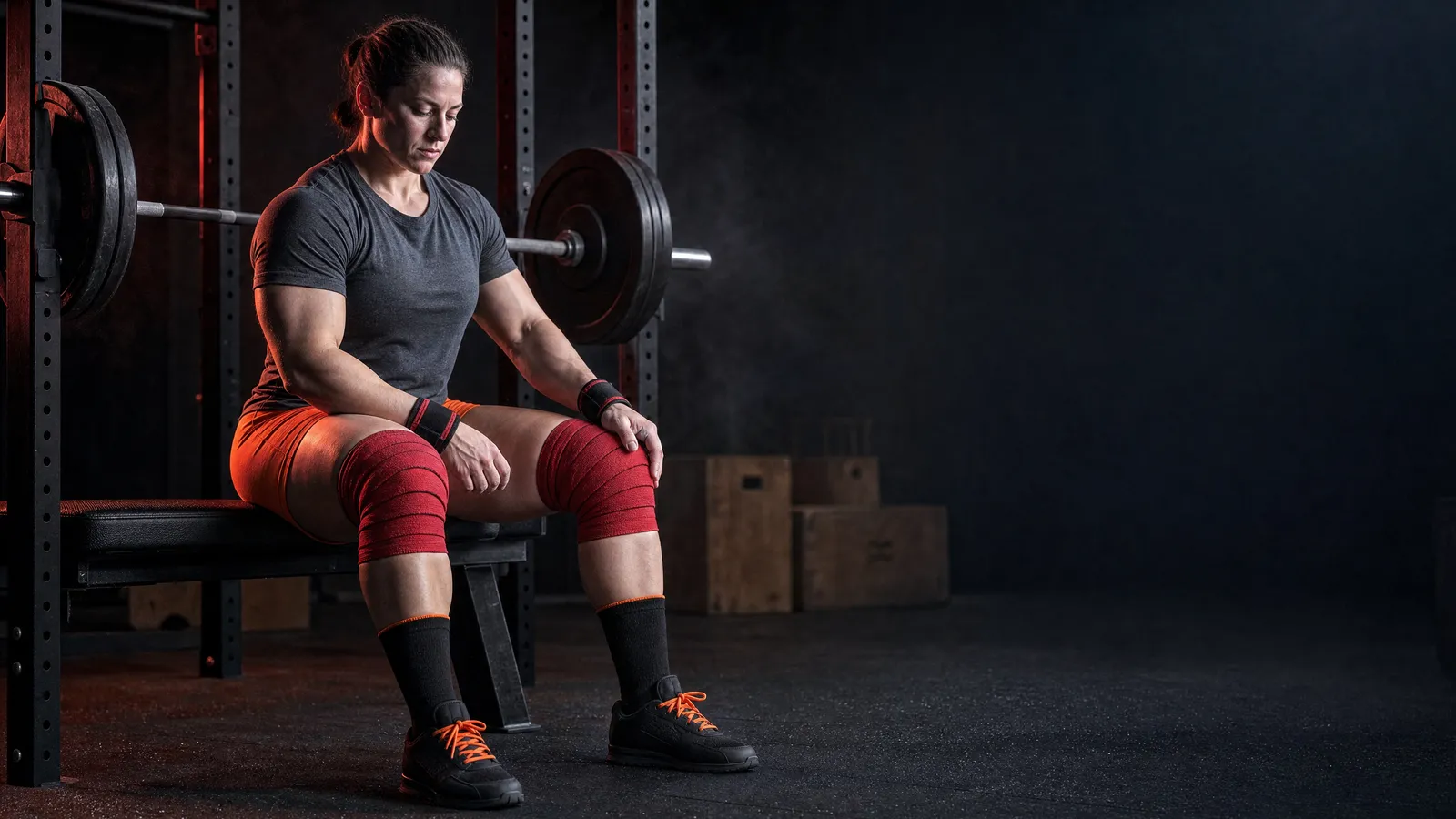
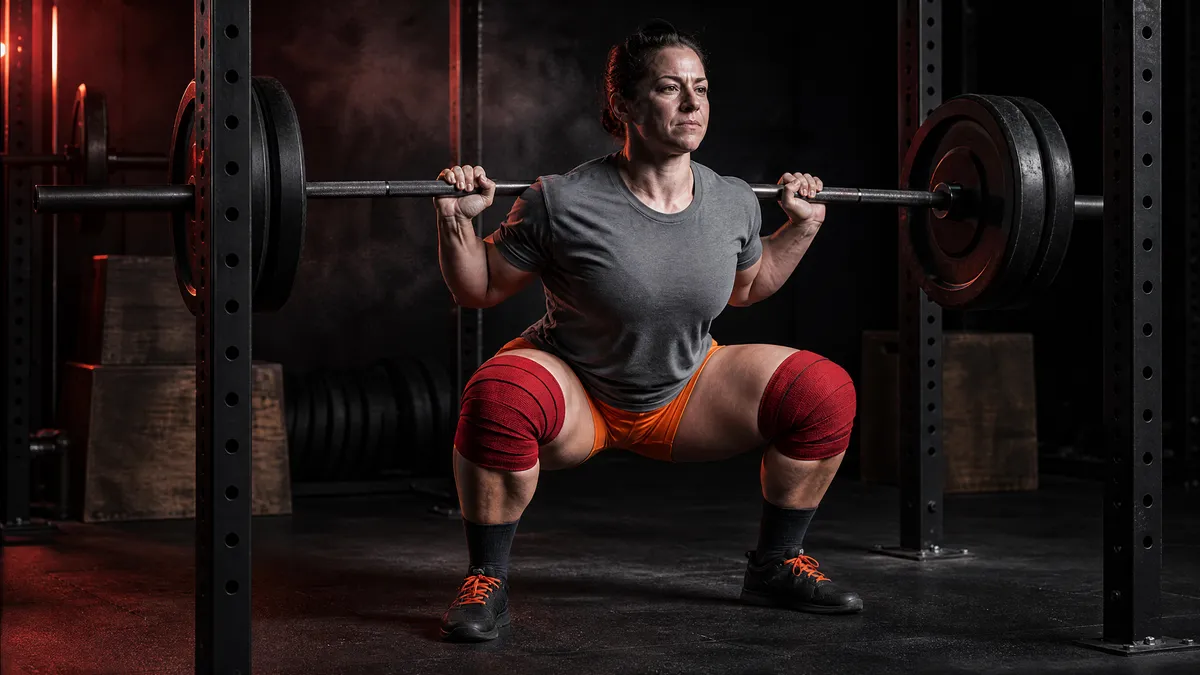
The longest of the three (ours are 200cm, sold in pairs). They give firm, springy support at the bottom of heavy squats. Start just below the knee and spiral up over the joint with each turn overlapping. Most lifters wrap seconds before the set and unwrap straight after. A training partner helps a lot while you learn.
Wraps or sleeves?
- Sleeves slide on, give steady warmth and compression, and stay on for the whole session.
- Wraps are tighter, adjustable and much firmer, but only for the heavy sets.
- Many lifters wear sleeves for the session and add wraps over the top for their heaviest work.
What’s in my bag
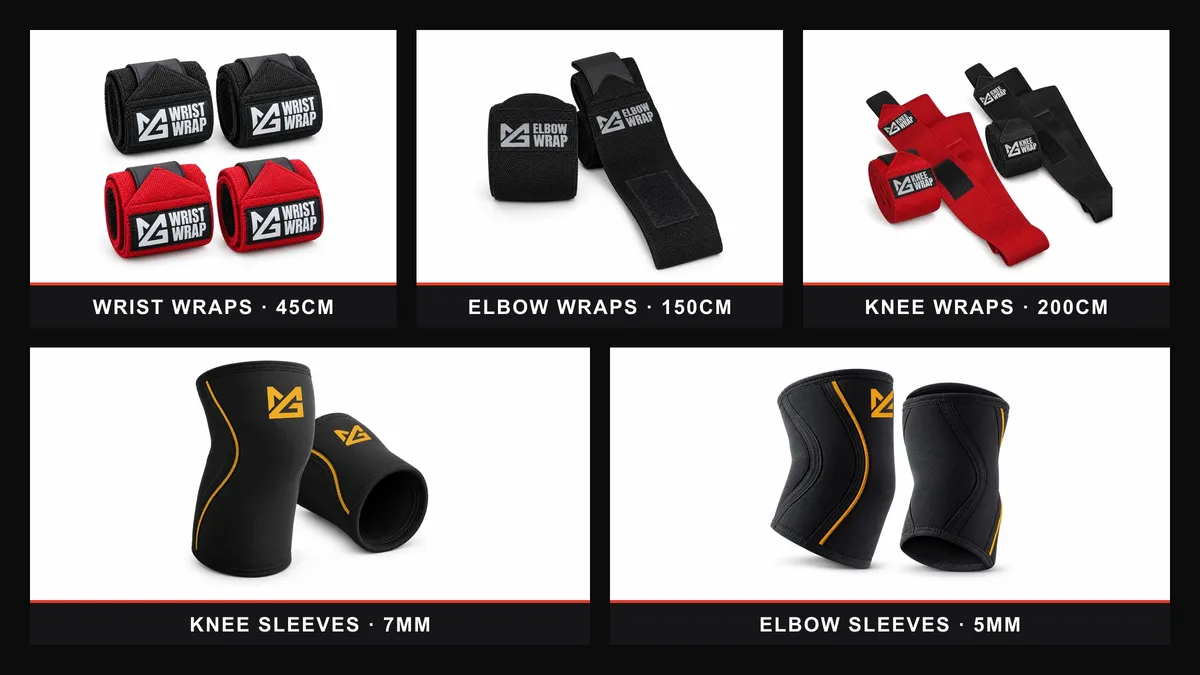
45cm, strong support, hook-and-loop. Black or red.
Shop now →Might&Glory Elbow Wraps · 150cm
150cm heavy-duty cotton spandex.
Shop now →Might&Glory Knee Wraps · 200cm
200cm, sold in pairs, hook-and-loop closure.
Shop now →Might&Glory Knee Sleeves · 7mm
If you want support all session, start here.
Shop now →Might&Glory Elbow Sleeves · 5mm
5mm neoprene sleeves for easy, all-session elbow warmth.
Shop now →
Squat and Bench packs on the Powerlifting hub. Free UAE delivery over AED 350.
Questions people ask me
Are wraps allowed in powerlifting competitions?
It depends on your federation and division. Many “raw” divisions allow wrist wraps and knee sleeves but not knee wraps. Check your federation’s rules before you compete.
Can beginners use wraps?
Wrist wraps, yes, once you press heavier. Knee and elbow wraps are best left until your technique is solid and the weights are heavy.
How tight should knee wraps be?
Firm enough to feel springy at the bottom of the squat, never so tight that your foot tingles or goes numb. Unwrap between sets.
How do I wash wraps?
Hand or gentle cold wash, then air dry. Keep the hook-and-loop closure fastened in the wash so it doesn’t catch.
Keep going
- Squat day: my squat guide
- Arif’s bench press guide
- Knee sleeves vs knee wraps, with Shamil
- Everything for the big three: the Powerlifting hub
This guide is general training information, not medical advice. If you have an injury or ongoing pain, talk to a physiotherapist or doctor before training.
Bella is an illustrative MG crew character created for our brand. The coaching here is written by the MG Activewear team.
Leave your comment