







The squat is the foundation of almost every lower-body training program, from a first-timer’s bodyweight squat to a competitive powerlifter’s heavy back squat. Alongside the deadlift and bench press, it makes up the three competitive powerlifting movements — and it is one of the most researched exercises in strength science.
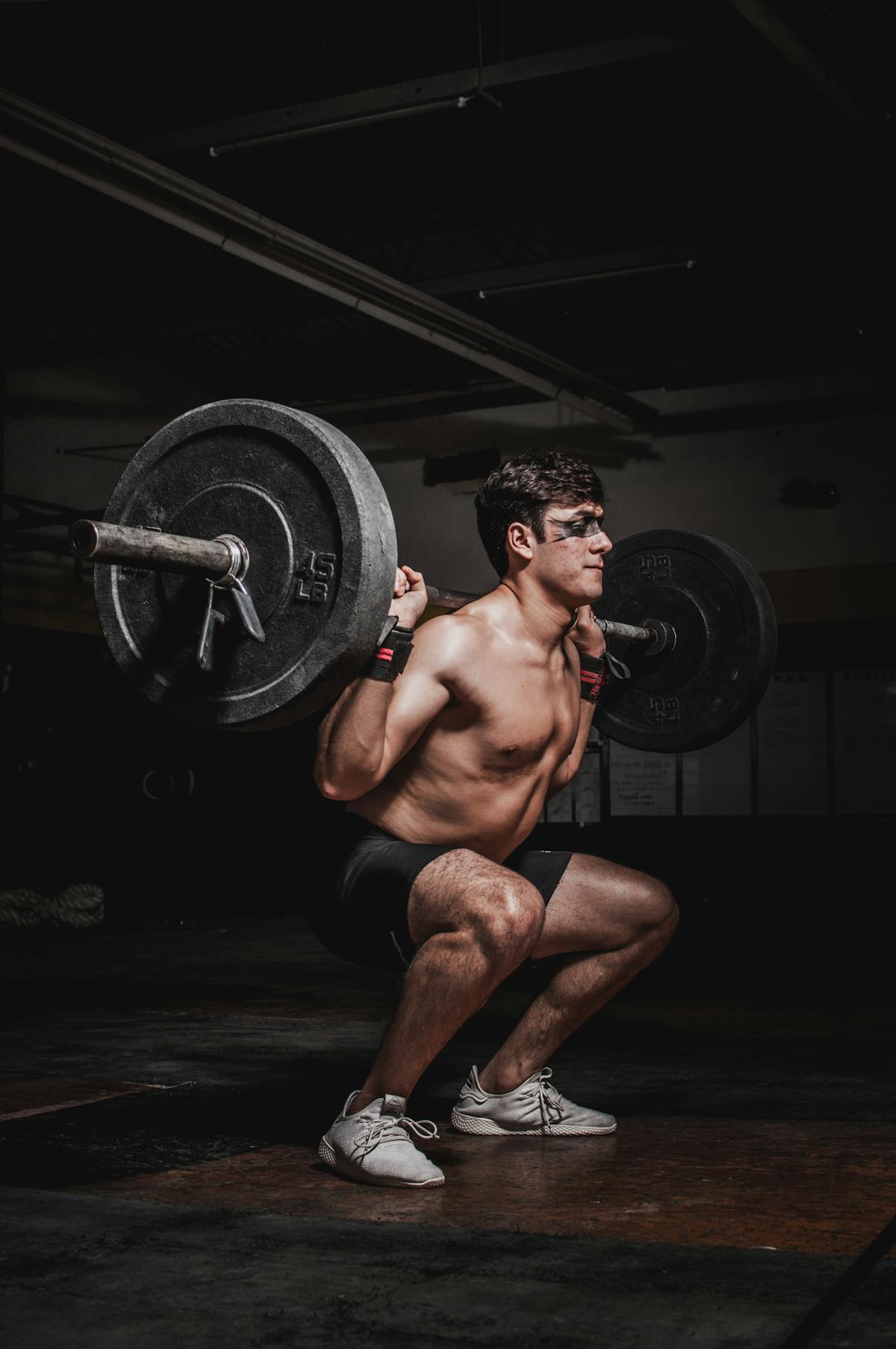
Photo: Leonmart / Pexels
What Muscles Do Squats Work?
The squat is a compound, multi-joint movement that extends both the hip and the knee at once, which is why it recruits more total muscle mass than almost any other lower-body exercise (NASM, 2026). The exact split between quads and glutes shifts with depth, stance and bar position, but the prime movers stay the same (Garage Gym Reviews, 2024; ISSA, 2024).
- Quadriceps – the rectus femoris, vastus lateralis, vastus medialis and vastus intermedius act as the primary knee extensors throughout the movement (NASM, 2026).
- Gluteus maximus – the main hip extensor, working hardest during the ascent out of the bottom position (NASM, 2026).
- Hamstrings – assist hip extension and help control the descent, though squats stimulate them less than the glutes and quads (Booty Builder, 2026).
- Adductor magnus – becomes a significant contributor to hip extension as squat depth increases, which is why deep squats are often felt through the inner thigh (NASM, 2026).
- Gluteus medius and core stabilisers – the transverse abdominis, obliques, erector spinae and gluteus medius work isometrically to keep the spine stable and the knees tracking correctly under load (NASM, 2026).

Anterior muscle diagram: derivative of OpenStax Anatomy & Physiology, via Wikimedia Commons, CC BY-SA 4.0 (CFCF, 2015).
How to Perform a Barbell Back Squat
Good squat form keeps the load moving through your hips and midfoot, with your knees tracking in line with your toes throughout (ISSA, 2024).
- Set up under the bar. Position the bar across your upper traps (high bar) or rear delts (low bar), feet roughly shoulder-width apart, toes turned out slightly.
- Brace before you move. Take a breath, brace your core, and unrack the bar with your chest up and shoulder blades pulled together.
- Break at the hips and knees together. Sit back and down at the same time — don’t let the knees shoot forward first or the hips fire back alone.
- Descend to depth. Lower until your hip crease passes below your knee, keeping your whole foot planted and your knees tracking with your toes.
- Drive up through the midfoot. Push the floor away, extending the hips and knees together, keeping the bar path vertical over your midfoot.
- Stand tall to finish. Fully extend your hips at the top — don’t stop short, and don’t hyperextend the lower back.
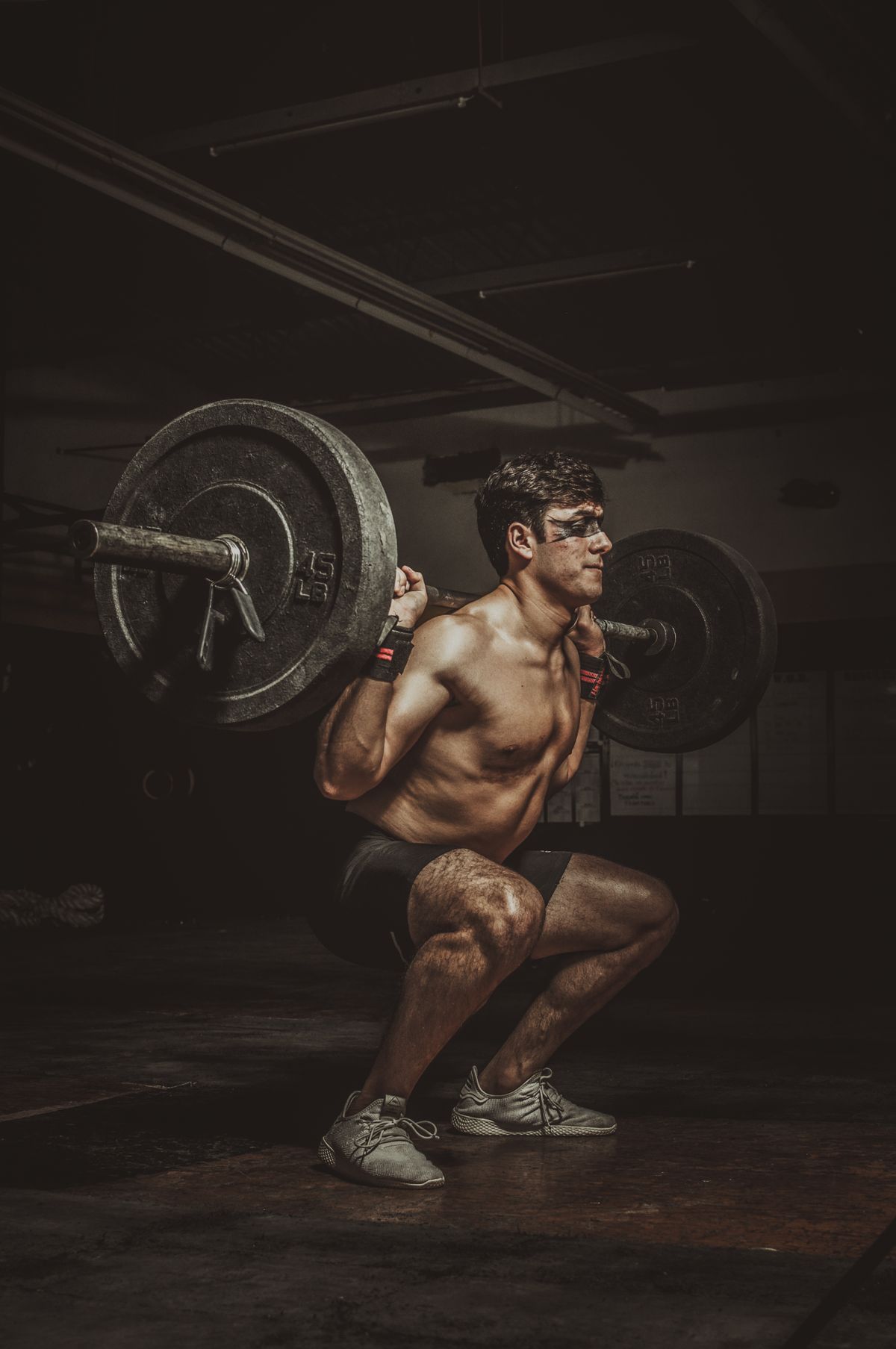
Depth position: hip crease below the knee, knees tracking with the toes, chest up. Photo: Pexels
A simple starting routine: 3–5 sets of 5–8 reps, resting 2–3 minutes between sets, builds a solid strength base once your depth and bar path are consistent.
Common Squat Mistakes (and How to Fix Them)
Most squat pain and stalled progress trace back to a small set of repeated technique faults:
- Knee valgus (knees caving in). This is usually the result of the hip adductors overpowering a weaker gluteus medius and minimus (The Cooper Institute, 2026; The Barbell Physio, 2024). Fix: cue your knees to track over your second and third toe, and strengthen the hip abductors with banded work.
- Heels rising off the floor. Often a sign of limited ankle dorsiflexion rather than a strength problem (Personal Trainer Denver, 2026). Fix: work on ankle mobility, or use a small heel wedge or weightlifting shoe as a programming tool — not a permanent crutch.
- Rounding the lower back. Happens when the core isn’t braced before the descent, letting the spine flex under load (Elite Integrated Therapy Centers, 2023). Fix: brace hard before you break at the hips, and reduce the weight until you can hold a neutral spine through the full range.
- Stopping short of depth. Limits the contribution of the glutes and adductors and shifts more of the work onto the quads alone (Booty Builder, 2026). Fix: work on hip and ankle mobility so you can comfortably reach hip-crease-below-knee depth.
- Chasing weight over quality reps. Loading up before your pattern is consistent is one of the fastest ways to reinforce knee valgus or spinal rounding (Pro Vita Physical Therapy, 2024). Fix: master the movement with lighter loads first, and add weight only when every rep looks the same.
If you have persistent knee or lower back pain, or you can’t find a pain-free squat pattern on your own, a physical therapist can assess your specific mobility and movement compensations (Pro Vita Physical Therapy, 2024).
Gear for Safer, Stronger Squats
The right equipment supports good positioning once the bar gets heavy:
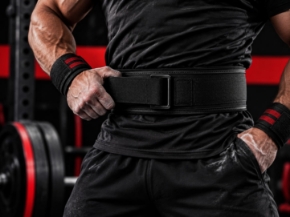
Lifting Belt: A powerlifting lever belt gives your core something to brace against during the descent, helping you keep a neutral spine under load.
Knee Sleeves: Our gym accessories range includes knee sleeves that add warmth and light compression through the bottom of the squat, useful once you’re training at depth regularly.
Training Shoes: A flat, stable sole — or a raised heel for those who need extra ankle range — makes a real difference in bar-path consistency. Browse our training shoes and footwear.
Gym Shorts and Leggings: Squat depth needs freedom of movement through the hips. Our women’s gym leggings and men’s training shorts are built with that range of motion in mind.
The Takeaway
The squat trains your quads, glutes, hamstrings, adductors and core stabilisers in one movement — few exercises build as much usable lower-body strength per rep. Get your depth and bar path consistent, fix knee valgus and back rounding early, and add load gradually, and the squat will carry over to almost everything else you do in the gym.
References
Booty Builder (2026) Squat Muscles Worked: Glutes vs Quads Explained. Available at: https://bootybuilder.com/exercises/squat/muscles-worked-glutes-vs-quads/ (Accessed: 17 September 2026).
CFCF (2015) Anterior View of Muscles [Image]. Derivative of OpenStax Anatomy & Physiology. Wikimedia Commons. Available at: https://commons.wikimedia.org/wiki/File:Anterior_View_of_Muscles.jpg (Accessed: 17 September 2026). Licensed under CC BY-SA 4.0.
Elite Integrated Therapy Centers (2023) Safe Squats: Proper Form and Common Mistakes. Available at: https://elitetherapycenters.com/safe-squats-proper-form-and-common-mistakes/ (Accessed: 17 September 2026).
Garage Gym Reviews (2024) What Muscles Do Squats Work? Available at: https://www.garagegymreviews.com/what-muscles-do-squats-work (Accessed: 17 September 2026).
ISSA (2024) The Squat: Muscles Worked, Form, Variations, and More. Available at: https://www.issaonline.com/blog/post/the-squat-muscles-worked-form-variations-and-more (Accessed: 17 September 2026).
NASM (2026) The Biomechanics of the Squat: What Personal Trainers Need to Know. Available at: https://www.nasm.org/resource-center/blog/training/biomechanics-of-the-squat (Accessed: 17 September 2026).
Personal Trainer Denver (2026) 12 Squat Mistakes: Form Fixes From a Denver Personal Trainer. Available at: https://www.michaelmoodyfitness.com/personaltrainersfitnessanddietblog/common-squat-mistakes-form-fixes (Accessed: 17 September 2026).
Pro Vita Physical Therapy (2024) Squats and Knee Pain: A Physical Therapist’s Perspective. Available at: https://provitapt.com/squats-and-knee-pain-a-physical-therapists-perspective/ (Accessed: 17 September 2026).
The Barbell Physio (2024) Addressing Knee Valgus in Squats. Available at: https://thebarbellphysio.com/addressing-knee-valgus-in-squats/ (Accessed: 17 September 2026).
The Cooper Institute (2026) Correcting the Squat with Knee Valgus. Available at: https://www.cooperinstitute.org/blog/correcting-the-squat-with-knee-valgus (Accessed: 17 September 2026).